
The Modern Staging Revolution: Digitally Furnishing Your Way to a Contract
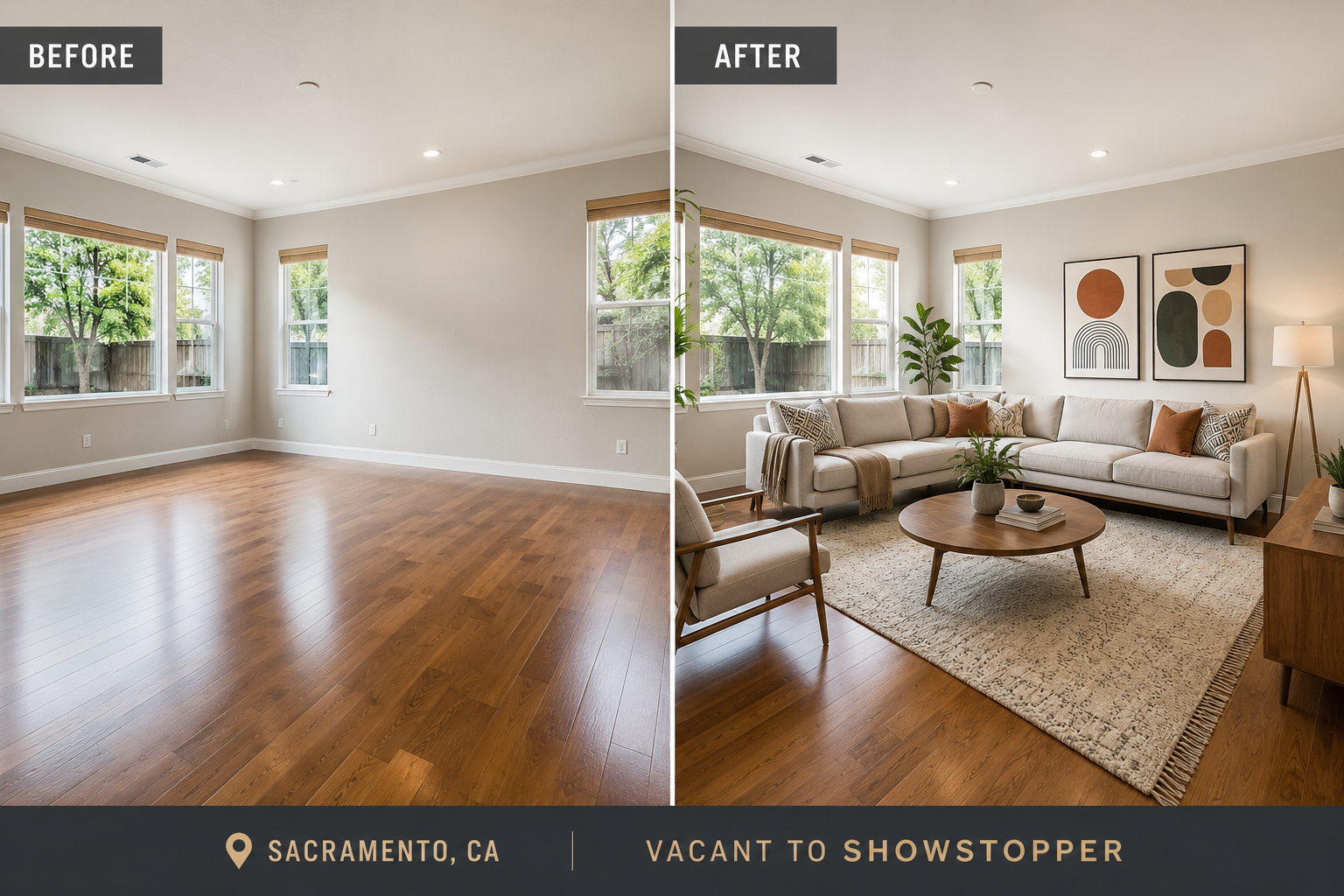
Virtual staging for real estate is the most efficient way to transform a cold, vacant property into an inviting "showstopper" that captures a buyer’s imagination instantly. In today’s fast-paced digital market, an empty room isn't just a blank canvas; it’s a liability that often looks smaller, lacks purpose, and causes potential buyers to scroll past in less than three seconds.
For homeowners and agents, the consequence of a vacant listing is a stagnant days-on-market count and the inevitable pressure of a price drop—simply because buyers couldn't visualize the lifestyle your property offers.
By reading this guide, you will understand how to leverage advanced digital furnishing to spark immediate emotional engagement and justify a premium asking price. You’ll gain the clarity needed to decide between different staging styles and understand how this technology drives 403% more online inquiry. Let’s dive into how virtual staging for real estate moves buyers from a casual click to a signed contract.
Beyond the Empty Room: Understanding Virtual Staging for Real Estate
Virtual staging for real estate is a high-tech post-production process where interior designers and digital artists "furnish" a property using 3D modeling software. Unlike traditional staging, which involves the logistical nightmare of renting, moving, and insuring physical furniture, digital staging allows you to populate a vacant space with modern, high-contrast decor that exists only in the digital listing photos.
It works by taking high-resolution residential real estate photography and overlaying perfectly scaled, hyper-realistic furniture that matches the architectural style of the home.
For property owners and agents in Northern California, this technology is a critical survival tool in a high-velocity market. An empty house lacks "spatial context," meaning buyers often struggle to judge if a king-sized bed will fit or where the dining table should sit.
By utilizing virtual staging services, you eliminate the cold, echoey feel of a vacant home and replace it with an emotional narrative. This matters because a home that feels "move-in ready" online earns significantly more saves and shares, directly leading to a 32% faster sales rate and higher closing prices.
Key Benefits of Digital Furnishing:
- Scale and Purpose: It clearly defines how to use awkward or large spaces, turning an empty alcove into a functional home office.
- Aesthetic Flexibility: You can choose a "Modern Farmhouse" look for a suburban home or "Sleek Industrial" for an urban condo to target specific buyer demographics.
- Massive Cost Savings: You achieve the high-end look of a million-dollar estate at a fraction of the cost of physical staging.
A common mistake is assuming that virtual home staging is just for empty houses. In reality, it is equally powerful for decluttering or "virtually renovating" spaces with dated furniture, a concept that leads us to the strategic application of this tech in the field.
The Strategic Advantage: How Virtual Staging for Real Estate Drives Results
Successfully implementing virtual staging for real estate is about more than just placing a digital sofa in a room; it is a calculated marketing move designed to trigger a specific psychological response in potential buyers. By transforming empty, uninspiring shells into vibrant living spaces, you bridge the gap between a "property for sale" and a "future home."
To ensure your listing achieves its maximum potential, we utilize a precise workflow that guarantees every real estate virtual staging project looks authentic and cinematic.
1. High-End Base Photography
The foundation of great digital staging isn't the software—it’s the original photo. Our team captures high-contrast, professional-grade residential photography specifically composed to leave room for furniture.
We focus on wide angles and natural light paths, ensuring that when the 3D furniture is added, the shadows and reflections align perfectly with the home's real architectural features.
2. Targeting Your Buyer Persona
One of the greatest strengths of virtual home staging is the ability to curate the decor to match the likely buyer.
- Modern Minimalist: Perfect for urban condos or new builds in Sacramento, appealing to young professionals who value clean lines and open spaces.
- Modern Farmhouse: A high-demand aesthetic for suburban families in Roseville or Elk Grove, focusing on warmth, texture, and cozy living areas.
- Luxury Traditional: Essential for million-dollar estates in El Dorado Hills, utilizing high-end textures, grand dining sets, and sophisticated art.
3. Solving the "Spatial Mystery"
A common hurdle for buyers is the inability to gauge room size. An empty bedroom often looks smaller than one with a bed. By digitally placing a king-sized bed and nightstands, we provide immediate visual proof of the home’s functionality.
This is particularly effective for commercial properties or open-concept living rooms where the transition between dining and lounging areas isn't immediately obvious.
4. High-Contrast Post-Production
Once the 3D assets are placed, we perform a final color grade to ensure the "digital" elements feel "physical." We adjust the lighting on the furniture to match the actual sun position in the photo, preventing that "pasted-on" look common with lower-end virtual staging AI tools.
This attention to detail is what creates the "showstopper" effect that keeps buyers engaged with your listing longer.
5. Managing Buyer Expectations
To maintain professional integrity, it is a best practice to include both the empty and the staged versions of the room in your MLS gallery. This transparency allows buyers to appreciate the "potential" shown in the virtual house staging while knowing exactly what they will see during the physical walkthrough.
By following these strategic steps, you aren't just decorating a room; you are building a compelling visual narrative that moves listings 32% faster. This level of market readiness ensures that your property doesn't just sit on the MLS—it dominates it.
Real-World Impact: Virtual Staging in Action
Seeing the transformation from a cold, vacant interior to a warm, livable home illustrates the immediate power of this technology. These practical use cases show how virtual staging for real estate delivers a competitive edge for Northern California property owners.
- The Vacant New Build: A developer in Elk Grove had a newly finished home that felt echoey and small despite its generous square footage. By applying digital staging real estate techniques, we added a modern sectional and a ten-person dining set, clearly defining the open-concept layout.
The outcome was a 32% faster sale compared to similar vacant units in the neighborhood, as buyers could finally visualize their own furniture in the space.
- The High-End Relocation Listing: An agent representing a million-dollar estate needed to capture the attention of out-of-state executives moving to Folsom.
We used ai virtual staging to curate a sophisticated, high-contrast home office and a cinematic primary suite, which we then showcased in a video walkthrough. This visual "hook" led to an all-cash offer from a remote buyer who felt an immediate emotional connection to the staged lifestyle.
- The Dated Rental Refresh: A property owner used virtual home staging to replace old, heavy furniture in listing photos for a short-term rental, showing the space's modern potential. This small digital update led to a significant increase in booking inquiries without the cost of a physical remodel.
These examples prove that digital furnishing is a high-ROI tool that works in real market conditions. You can apply these same strategies to ensure your listing doesn't just sit on the market, but stands out as a "showstopper."
Pro Tips for High-Impact Real Estate Virtual Staging
Mastering the nuances of virtual staging for real estate is the difference between a listing that looks "photoshopped" and one that feels like a high-end interior design spread. These professional strategies ensure your digital assets work as hard as possible to convert casual browsers into serious buyers.
- Choose a Consistent Aesthetic Theme: Avoid mixing decor styles between rooms, as this breaks the mental "flow" for a buyer. If you start with a modern minimalist look in the living room, maintain that thread throughout the kitchen and bedrooms. This creates a cohesive narrative that makes the home feel like a curated sanctuary rather than a collection of random ai virtual staging assets.
- Balance Furniture with Architectural Features: Never let digital furniture hide the home's best selling points, such as custom stonework or premium flooring.
We recommend using low-profile furniture in rooms with breathtaking view-oriented windows to ensure the landscape remains the "hero" of the shot. This maintains the home's integrity while adding the warmth needed to spark an emotional connection.
- Use Virtual Staging for "Spatial Problem Solving": If a room has an awkward layout, use digital staging to suggest a solution. For example, turning a small, windowless alcove into a cozy "Zoom room" or home office can instantly add value in the eyes of a modern professional.
This proactive approach answers the buyer's unspoken questions about functionality before they even step foot on the property.
By implementing these expert-level adjustments, you ensure your listings maintain a professional edge that drives engagement and justifies a premium price point.
Elevate Your Listings with Virtual Staging for Real Estate
You now have the strategic foundation to turn any vacant or uninspired listing into a high-contrast "showstopper" that commands buyer attention. By leveraging virtual staging for real estate, you can effectively bridge the visual gap for potential buyers, allowing them to see the scale, purpose, and lifestyle potential of a home before they ever request a tour.
This modern approach to digital staging real estate is more than just a convenience; it is a proven marketing engine designed to reduce days on market and maximize your final sale price.
Taking action today gives you a decisive edge in the competitive Northern California marketplace, ensuring your properties never sit idle due to a lack of imagination. Embracing these visual tools allows you to move forward with the confidence that your marketing kit is optimized for maximum ROI and a faster path to a signed contract.
Ready to transform your empty rooms into a powerful sales tool? Explore our professional virtual staging for real estate options and book your project to start turning clicks into contracts today.
Common Questions About Virtual Staging for Real Estate
Is virtual staging for real estate legal for MLS listings?
Yes, virtual staging for real estate is legal and widely used, provided you follow local MLS disclosure rules. Most boards require a simple watermark or a caption in the photo description stating that the room has been digitally enhanced.
This transparency ensures that you are following ethical guidelines while still leveraging the high-impact benefits of virtual house staging to capture buyer interest and show the home's full potential.
Can I use virtual staging for real estate to change fixed features?
While virtual staging real estate is perfect for adding furniture and decor, you should avoid digitally altering fixed structural features like flooring or countertops unless it is clearly labeled as a "renovation rendering."
The goal is to furnish the space, not to misrepresent its physical condition. Maintaining this professional integrity ensures that when a buyer arrives for a residential properties walkthrough, their expectations align with reality.
How does virtual staging for real estate compare to physical staging?
Virtual staging for real estate is significantly faster and more cost-effective than traditional methods. Physical staging often requires thousands of dollars in furniture rentals and several days of labor.
In contrast, digital staging real estate can be completed within 24–48 hours for a fraction of the price. This allows you to launch your listing immediately with high-end, modern visuals that drive the same emotional engagement as physical furniture.
What is the best way to use virtual staging for real estate on social media?
The best way to use real estate virtual staging on social media is through "Before and After" transitions. These posts are highly engaging because they demonstrate the transformative power of the space in a single swipe.
By showcasing a vacant, echoey room turning into a cinematic living space, you create a "thumb-stopping" moment that encourages potential buyers to click through to your full property website and view the entire marketing kit.