FAA Rules for Real Estate Drones
What Every Real Estate Professional Should Know About Drone Regulations
Drone photography has transformed modern property marketing. Aerial imagery showcases lot boundaries, neighborhood proximity, landscaping, roof condition, surrounding amenities, and architectural scale in ways ground-level photography simply cannot match. From luxury estates to commercial developments, drones have become a core marketing asset.
However, before launching an aircraft over any listing, every agent, broker, and media professional must understand real estate drone FAA rules in the United States.
The Federal Aviation Administration (FAA) regulates all drone operations nationwide. When drones are used for business purposes, including listing photography, video walkthroughs, promotional content, or inspection work, they fall under commercial aviation rules.
Compliance is not optional.
Failing to follow real estate drone FAA rules can lead to:
- Significant financial penalties
- Legal liability exposure
- Loss of pilot certification
- Insurance complications
- Reputational damage
Understanding the regulatory framework protects your business, your clients, and the public. Whether you’re an agent hiring a drone operator or a company offering aerial services, this guide explains everything you need to know about drone regulations for real estate.
Understanding Real Estate Drone FAA Rules Under Part 107
In the United States, commercial drone operations, including real estate marketing, fall under FAA Part 107 regulations. These are often referred to as commercial drone rules.
If money changes hands in any way, directly or indirectly, the flight is considered commercial. That includes:
- Paid listing photography
- Promotional videos
- Social media marketing content
- Property inspections
- Commercial property development marketing
- Any media used to generate business
Let’s break down the key requirements.
Step 1: Obtain a Remote Pilot Certificate
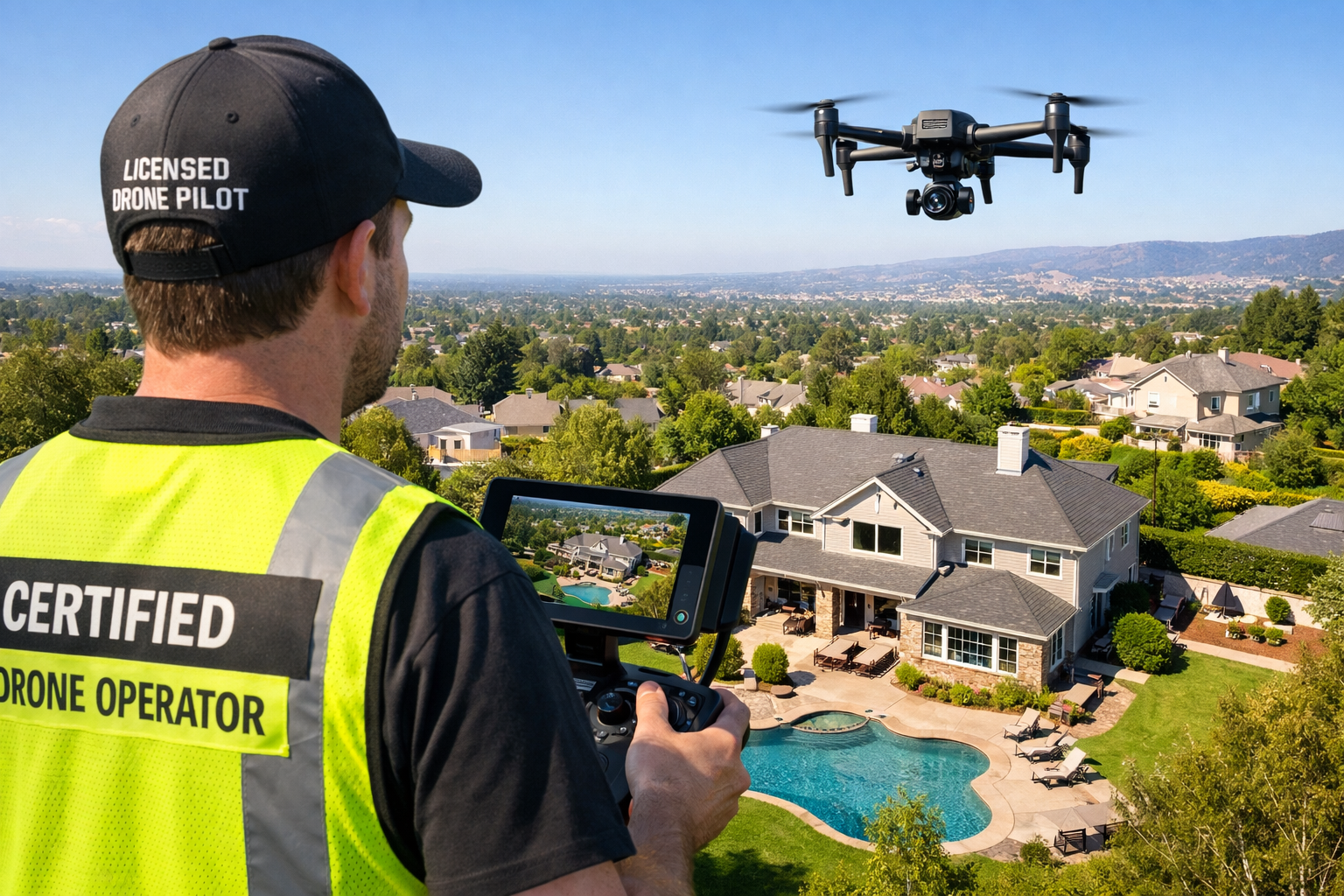
To legally operate a drone for business purposes, the pilot must hold an FAA Remote Pilot Certificate under Part 107. This is one of the most critical components of real estate drone FAA rules.
Purpose of Certification
This ensures the operator understands:
- Airspace classifications
- Weather patterns and aviation hazards
- Emergency procedures
- Radio communication protocols
- Operational limitations
- Safety compliance
Requirements Include:
- Being at least 16 years old
- Passing the FAA Aeronautical Knowledge Test
- Completing a TSA security background check
Without this certification, flying a drone for paid real estate work is illegal under federal law.
This applies whether you're shooting residential homes, luxury estates, or using drones for commercial real estate marketing campaigns.
Step 2: Register the Drone with the FAA
All drones used commercially must be registered with the FAA before flight.
Why Registration Matters
Registration connects the drone to its operator, ensuring accountability and traceability in case of incidents or airspace violations.
Key requirements include:
- Registration renewal every three years
- Registration number visibly displayed on the aircraft
- Compliance regardless of drone size when used commercially
Even lightweight drones used for real estate photography must be registered if the purpose is business-related.
Failure to register is a direct violation of faa drone rules for commercial use.
Step 3: Follow Airspace and Altitude Restrictions
One of the most misunderstood parts of real estate drone FAA rules involves airspace classifications.
Maximum Altitude
Under Part 107:
- Maximum altitude is 400 feet above ground level
- Higher altitudes require specific conditions (such as flying near structures)
Visual Line of Sight
The drone must remain within the pilot’s visual line of sight at all times.
Controlled Airspace
Many properties are located near:
- Regional airports
- Heliports
- Military installations
- Controlled city airspace
In these situations, operators must obtain authorization through the FAA’s LAANC (Low Altitude Authorization and Notification Capability) system before flying.
Failure to check airspace is one of the most common violations in drone regulations for real estate.
Professional operators always conduct pre-flight airspace checks before arriving at a listing.
Step 4: Respect Privacy and Safety Regulations
The FAA governs navigable airspace, but privacy concerns are often addressed at the state or local level.
A common question agents ask is:
Can you fly a drone over private property?
Technically, the FAA controls the airspace, not property owners. However, that does not mean unrestricted use is automatically lawful in all circumstances.
This leads to another common question:
Is it legal to fly a drone over private property?
Generally, yes, if you are operating within FAA regulations and not violating privacy or nuisance laws. However, misuse of imagery, harassment, or surveillance can lead to civil liability.
When it comes to flying drones over private property, operators must consider:
- Avoiding intrusion into private spaces (e.g., windows)
- Respecting reasonable expectations of privacy
- Not hovering aggressively over individuals
- Avoiding reckless or hazardous flight
Flying Drones Over Private Land
In rural or commercial areas, flying drones over private land is often part of showcasing acreage, agricultural property, or development parcels. Even then, compliance with altitude, airspace, and safety rules remains mandatory.
Professional operators minimize risk by:
- Keeping flights focused on the subject property
- Avoiding unnecessary neighboring exposure
- Informing property owners of planned operations
Step 5: Night Operations and Special Conditions
Modern real estate marketing frequently includes twilight and sunset photography.
Under updated FAA guidelines:
- Night flights are permitted
- Anti-collision lighting must be visible for at least three statute miles
- The pilot must have completed required knowledge training
Luxury listings often benefit from dusk shots, but compliance with commercial drone rules ensures these operations remain lawful.
Step 6: Avoid Flying Over People and Vehicles
Another critical component of real estate drone FAA rules involves safety over human activity.
In most cases:
- Flying directly over uninvolved people is restricted
- Operations over moving vehicles are limited
- Crowded public areas require heightened caution
Urban listings present particular challenges. Pilots must plan flight paths that avoid pedestrians and traffic.
This is especially important when flying drone over private property located in dense residential or downtown environments.
Step 7: Maintain Insurance and Professional Standards
While insurance is not explicitly mandated under Part 107, it is considered best practice in commercial operations.
Professional drone companies maintain:
- Commercial liability insurance
- Equipment inspection logs
- Pre-flight checklists
- Flight records
- Maintenance documentation
These standards align with FAA expectations and demonstrate professionalism in the growing world of drones and real estate marketing.
Real-World Applications of Real Estate Drone FAA Rules
Understanding regulations becomes clearer when applied to real scenarios.
Suburban Property Near an Airport
A listing located within controlled airspace required LAANC authorization before takeoff. A certified operator secured approval in advance and completed the shoot legally and safely.
This prevented delays and protected the agent from regulatory risk.
Luxury Estate Marketing Campaign
A high-end property required golden-hour aerial shots for a premium listing presentation.
The operator:
- Verified airspace clearance
- Used approved anti-collision lighting
- Maintained visual line of sight
- Operated within altitude limits
The result: compliant, stunning marketing assets that elevated the listing.
Urban Condo Listing
In a dense downtown area, a licensed pilot:
- Carefully mapped a flight path
- Avoided pedestrians
- Respected traffic corridors
- Maintained safe buffer distances
Knowledge of drone regulations for real estate ensured both compliance and professionalism.
Why Hiring a Licensed Drone Operator Matters
For agents and brokers, the responsibility ultimately falls on the pilot operating the aircraft, but hiring an unlicensed operator still creates liability exposure.
Before hiring a drone provider, verify:
- FAA Part 107 certification
- Drone registration
- Proof of insurance
- Experience with airspace authorization
- Knowledge of commercial drone rules
Working with experienced providers such as BrookeHaven Media ensures compliance and professionalism.
You can explore their full range of real estate media services, including drone photography and video production.
If you're unsure whether a listing would benefit from aerial marketing, this helpful resource explains when to use a drone for real estate.
For specific questions about your property, you can always contact their team directly.
Hiring professionals protects your marketing timeline and eliminates guesswork surrounding faa drone rules for commercial use.
How Real Estate Drone FAA Rules Impact Marketing Strategy
Some agents view regulations as restrictive. In reality, standardized rules benefit the industry.
Real estate drone FAA rules create:
- Professional accountability
- Safer flight environments
- Predictable operations
- Higher service standards
- Increased consumer trust
Rather than limiting marketing potential, these regulations strengthen the legitimacy of drones for commercial real estate and residential marketing alike.
When compliance is built into workflow from the beginning, agents experience fewer delays, smoother approvals, and stronger listing presentations.
Frequently Asked Questions About Real Estate Drone FAA Rules
Do I need a license to fly a drone for real estate photography?
Yes. If the flight supports any business purpose, the pilot must hold a Part 107 Remote Pilot Certificate.
Do real estate drones need to be registered?
Yes. All drones used commercially must be registered with the FAA and display their registration number.
Can you fly a drone over private property?
In many cases, yes — provided the operator follows FAA airspace rules and does not violate privacy or nuisance laws. However, flying drones over private property must always be done responsibly and professionally.
Is it legal to fly a drone over private property?
Generally, yes, under federal aviation law. But misuse, harassment, or privacy invasion can result in legal consequences at the state level.
Are there altitude limits for real estate drone flights?
Yes. The standard limit is 400 feet above ground level unless special structural proximity allowances apply.
What happens if real estate drone FAA rules are violated?
Violations can result in:
- Civil penalties
- Certificate suspension or revocation
- Legal liability
- Reputational damage
Hiring a certified operator significantly reduces this risk.
Final Thoughts: Compliance Is a Competitive Advantage
The rapid growth of drones and real estate marketing has reshaped how properties are presented across the United States. Aerial imagery enhances listings, attracts more buyers, and creates stronger marketing impressions.
But none of those benefits matter if operations are not compliant.
Understanding and following real estate drone FAA rules ensures:
- Legal protection
- Public safety
- Marketing continuity
- Professional credibility
- Long-term business sustainability
Whether you're marketing a suburban home, a luxury estate, or leveraging drones for commercial real estate development, compliance is foundational.
Drone technology will continue to evolve. Regulations may adapt. But the core principle remains the same:
Professional, certified, and responsible operation is essential.
By prioritizing compliance, agents and media companies not only avoid penalties, they build trust, authority, and competitive advantage in an increasingly aerial-driven market.
If you're incorporating drone marketing into your listings, make sure your strategy aligns fully with FAA standards. When done correctly, aerial media is not just visually impressive, it's legally sound, strategically powerful, and professionally executed.