
MLS Photo Requirements and Optimization
Why MLS Photo Standards Matter More Than Most Sellers Realize
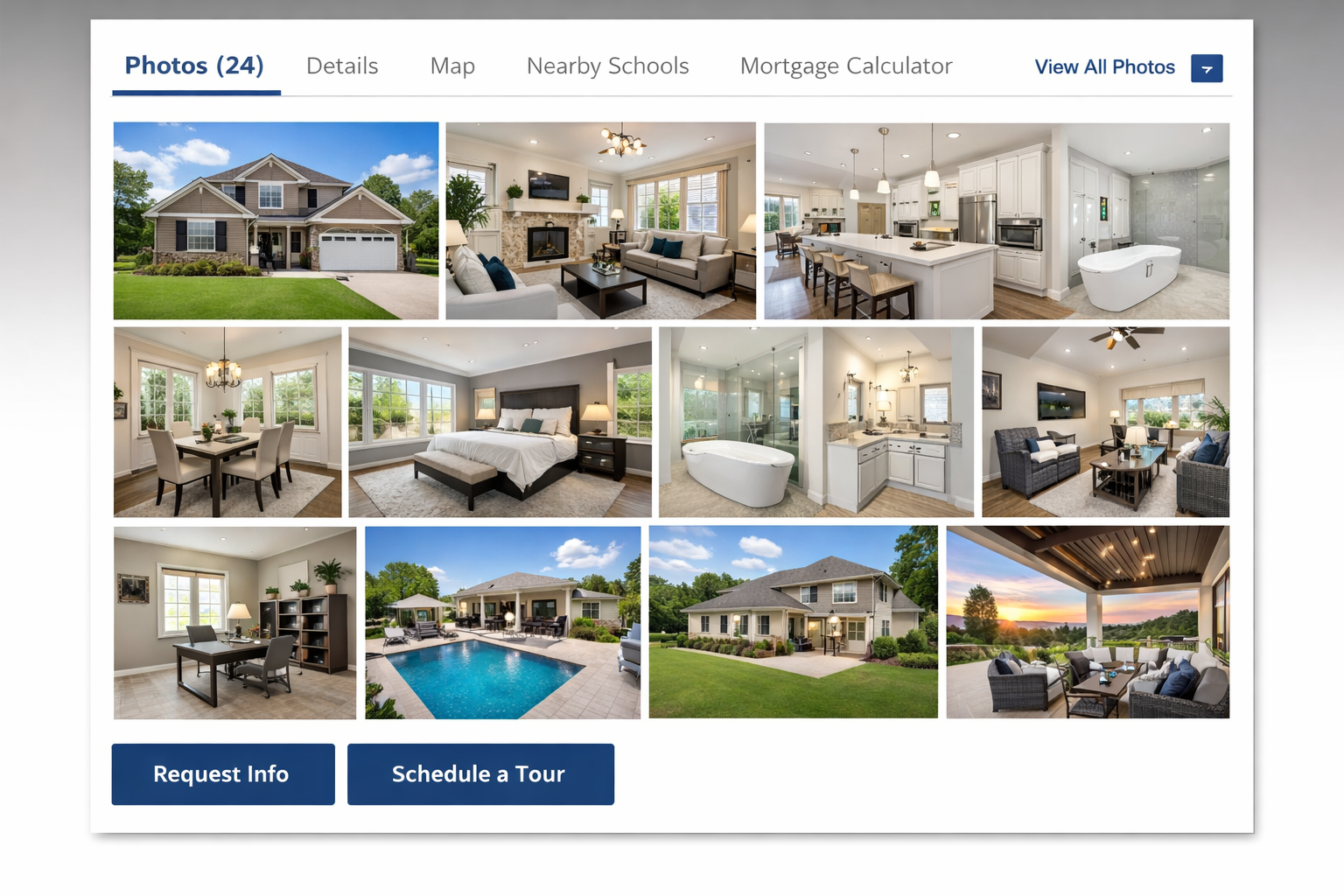
When a home goes live on the market, MLS photos are often the first and most influential touchpoint for buyers. Long before pricing details or property descriptions are reviewed, buyers make fast judgments based on visuals. That is why understanding MLS photo requirements and optimizing images within those rules is essential for listing performance across the United States.
Multiple Listing Services enforce specific technical standards to maintain consistency and fairness across listings. Photos that fail to meet MLS image size or formatting rules may upload poorly, appear compressed, or be rejected altogether. Even when images are accepted, improper optimization can make bright spaces look dark or distort room proportions.
This guide explains common MLS photo size requirements, outlines best practices for optimization, and shows why professional photography simplifies compliance while improving results.
Understanding Common MLS Photo Requirements
While requirements vary slightly by region, most MLS systems follow similar guidelines. These standards ensure images display correctly on MLS platforms and on syndicated sites such as Zillow and Realtor.com.
Typical MLS photo requirements include:
- Minimum and maximum image dimensions
- Accepted file formats, most commonly JPEG
- File size limits to prevent slow loading
- Orientation and aspect ratio guidelines
- Restrictions on text, logos, or watermarks
MLS platforms are designed to showcase properties, not agent branding. Violating these rules can result in automatic compression, cropping, or rejected uploads. Understanding the technical framework behind MLS listing photos helps agents and sellers avoid unnecessary delays.
MLS Photo Size Requirements Explained
One of the most common questions involves MLS photo size and resolution. While exact numbers vary, most systems require images large enough for clarity but small enough for fast loading.
General guidelines often include:
- A minimum resolution to prevent pixelation
- A maximum MLS listing photo size to avoid compression
- Consistent aspect ratios for proper display
Uploading oversized images does not improve quality. In fact, MLS systems often compress large files aggressively, reducing clarity. Starting with the correct MLS picture size ensures photos remain sharp after upload.
How to Optimize Photos Within MLS Guidelines
Use the Correct Image Size and Resolution
Begin with images sized specifically for MLS, not for print or social media. Properly prepared files maintain clarity and avoid unwanted compression.
Why it matters: Prevents blurry or pixelated MLS photos.
Practical tip: Export images at MLS-ready dimensions rather than resizing after upload.
Maintain Proper Orientation and Framing
Horizontal images display more consistently across MLS platforms. Vertical images are often cropped automatically, which can cut off key features.
Why it matters: Preserves composition and room scale.
Practical tip: Shoot with MLS display formats in mind during the session.
Avoid Text, Logos, and Watermarks
Most MLS systems prohibit branding on images. This includes agent logos, contact information, and promotional text.
Why it matters: Prevents rule violations and listing delays.
Practical tip: Keep branding in listing descriptions, not in MLS pictures.
Optimize Brightness and Color Accuracy
MLS compression can darken images. Thoughtful editing ensures photos remain bright, balanced, and realistic after upload.
Why it matters: Buyers respond more strongly to clean, natural visuals.
Practical tip: Avoid heavy filters or extreme HDR effects.
Select Listing Photos Strategically
MLS allows multiple images, but quality and order matter more than quantity. Lead with the strongest exterior or interior image to capture attention.
Why it matters: First images drive click-through rates.
Practical tip: Curate photos to tell a logical visual story.
How MLS Photo Optimization Affects Real Listings
Listings that meet MLS photo requirements and follow optimization best practices consistently outperform those that do not. Clear, properly sized images generate more online views, longer engagement, and higher-quality showing requests.
Agents often report that optimized MLS listing photos reduce time on market and improve perceived value. In competitive or luxury markets, strong MLS imagery can be the deciding factor between a quick sale and a stagnant listing.
Across the United States, buyers rely heavily on MLS photos to shortlist properties. Poor-quality or non-compliant images quietly undermine even the best-priced homes.
Common MLS Photo Mistakes to Avoid
Even experienced professionals can run into issues when MLS standards are overlooked.
Common mistakes include:
- Uploading phone photos without optimization
- Ignoring regional MLS rules
- Overloading listings with repetitive images
- Relying on automated editing tools
Avoiding these errors keeps listings compliant and visually competitive.
Why Professional Photography Makes MLS Compliance Easier
Professional photographers understand both visual storytelling and MLS technical standards. They capture, edit, and deliver images that meet MLS photo requirements while maximizing appeal.
Working with a specialized provider like Brooke Haven Media ensures images are MLS-ready, visually optimized, and strategically curated. Their team produces photography designed to perform across MLS platforms and all major real estate websites.
To learn more, visit their website, explore available services, or reach out through their contact page.
Final Thoughts on MLS Photo Requirements
Understanding and following MLS photo requirements is essential for any successful listing. From correct sizing and formatting to thoughtful optimization, every detail affects how buyers perceive a property online.
When MLS standards and professional photography work together, listings display cleanly, attract more attention, and convert views into showings. In a market where first impressions happen online, MLS-optimized photos are not optional. They are foundational.
Frequently Asked Questions About MLS Photo Requirements
Do all MLS systems have the same photo rules?
No. Requirements vary slightly by region, but core standards are similar.
Can MLS reject listing photos?
Yes. Photos that violate guidelines may be rejected or removed.
Is professional photography required for MLS?
It is not required, but it is strongly recommended for quality and compliance.
How many photos should be uploaded to MLS?
Enough to tell the property’s story clearly without overwhelming buyers.
Do MLS photos affect Zillow and other platforms?
Yes. MLS photos syndicate directly to major real estate websites, making optimization critical.