
Drone Video Real Estate
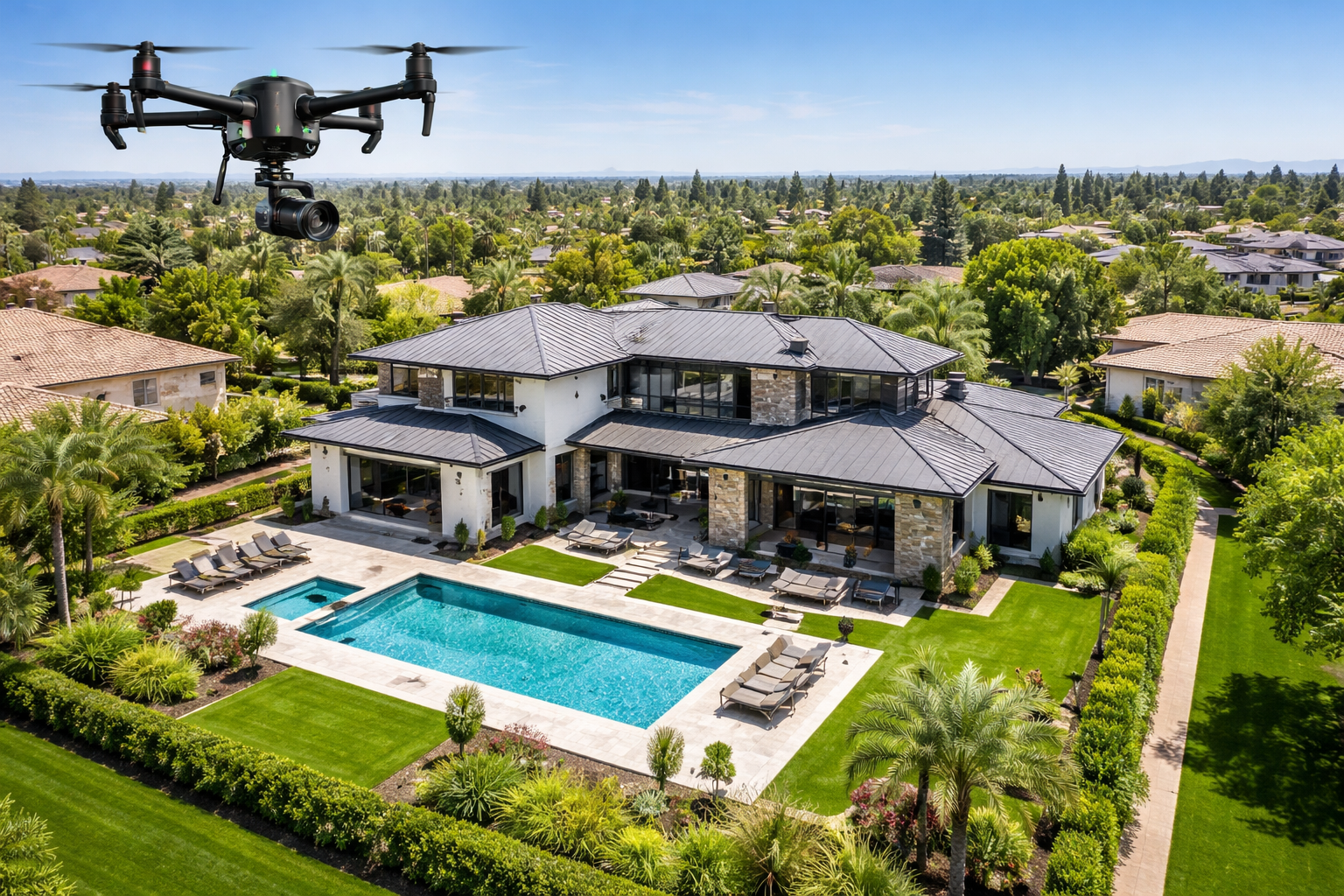
Drone Video vs Standard Listing Video
Video has become essential in modern U.S. real estate marketing. Buyers expect immersive experiences that help them visualize a property before scheduling a showing. But when planning your marketing strategy, a common question arises:
Should you use drone video real estate marketing, a traditional ground-level listing video, or both?
Each format serves a different purpose. Standard listing videos highlight interior details and room flow. Drone video for real estate adds scale, context, and cinematic storytelling from above.
Understanding the strengths of each approach helps agents and sellers choose the right strategy for maximum impact.
What Is Drone Video for Real Estate?
Drone video real estate marketing uses aerial footage captured by licensed drone operators to showcase properties from a bird’s-eye perspective.
Unlike traditional interior videography, real estate drone video highlights:
- Lot size and boundaries
- Rooflines and architectural design
- Driveway access and entry points
- Backyard features and outdoor amenities
- Proximity to parks, water, or commercial areas
Professional teams such as Brooke Haven Media combine drone filming for real estate marketing with ground-level shots to create seamless, cinematic presentations.
Drone videography for real estate is especially effective for:
- Luxury estates
- Waterfront homes
- Acreage properties
- Custom architecture
- Commercial real estate listings
Drone Video Real Estate vs Standard Listing Video
Perspective and Property Context
Purpose: Understand what each format communicates visually.
Standard listing videos focus on interior walkthroughs, room transitions, finishes, and layout details.
Drone real estate footage captures:
- Overall property scale
- Yard dimensions
- Surrounding homes
- Neighborhood layout
- Scenic views
If location and land value are key selling points, aerial real estate visuals become powerful marketing assets.
Emotional Impact and Engagement
Purpose: Capture attention quickly.
Drone video often delivers an immediate cinematic effect. Sweeping aerial shots create a strong first impression in the opening seconds, which is crucial for platforms like Instagram, YouTube, and Facebook.
Ground-level filming provides depth and detail once viewers are engaged.
When evaluating drone filming vs ground level filming advantages, aerial footage typically wins in grabbing attention, while interior video excels at sustaining interest.
Property Type Suitability
Purpose: Match video format to listing type.
Drone video real estate marketing works best for:
- Luxury homes
- Large properties
- Waterfront listings
- Scenic locations
- Commercial real estate drone video projects
Standard listing videos work well for:
- Condos and townhomes
- Urban properties
- Homes where interior design is the main value driver
For many listings, combining both formats creates the strongest marketing package.
Production Cost and Return on Investment
Purpose: Evaluate marketing investment.
Drone photography real estate cost and video pricing vary depending on:
- Property size
- Flight complexity
- Editing requirements
- Licensing and compliance
While drone production may add to the budget, the perceived value boost and increased engagement often justify the investment.
For a deeper breakdown of pricing expectations, visit the detailed guide on real estate videography cost 2025.
Digital Marketing Performance
Purpose: Maximize exposure across platforms.
Drone video real estate clips perform exceptionally well in short-form formats:
- Instagram Reels
- TikTok
- YouTube Shorts
- Facebook Ads
Aerial footage stops scrolling behavior.
Standard listing videos perform well on:
- MLS platforms
- Property websites
- Long-form YouTube presentations
Strategically using both formats increases reach and engagement.
Drone Photography vs Drone Video
It is important to distinguish between real estate drone photography and video.
Drone photography provides high-resolution still images of:
- Roof condition
- Lot boundaries
- Landscaping
- Neighborhood proximity
Drone video adds:
- Movement
- Storytelling
- Emotional engagement
- Cinematic transitions
Both real estate aerial drone photography and video serve valuable roles. Video tends to create stronger emotional connections, while photography supports MLS documentation and static listing needs.
Real-World Applications
Luxury Waterfront Home
Drone video showcases:
- Shoreline access
- Boat docks
- Surrounding views
- Backyard scale
Interior video then highlights finishes and layout flow.
The combination delivers a complete buyer experience.
Commercial Property
Commercial real estate drone video captures:
- Parking capacity
- Traffic patterns
- Access roads
- Nearby businesses
For commercial buyers, location context often directly impacts purchasing decisions.
Urban Condo
In a dense city environment, interior video may take priority. Drone footage adds skyline context but plays a supporting role.
The strategy should align with the property’s strongest features.
Best Practices for Drone Video Real Estate Marketing
To maximize results:
Hire Licensed Drone Operators
FAA-certified pilots ensure compliance and professional quality.
Capture at Optimal Lighting
Golden hour enhances texture and contrast.
Blend Aerial and Ground Shots
Start with a cinematic aerial introduction, transition into interior walkthroughs.
Use Across Multiple Channels
Promote videos on:
- MLS
- Property websites
- Social media
- Email campaigns
- Paid advertising
For service details and booking, visit the services page or reach out through the contact page.
Frequently Asked Questions
Is drone video necessary for every listing?
No. It provides the greatest impact for properties with strong exterior features, land value, or scenic surroundings.
Does drone video increase engagement?
Yes. Real estate drone footage typically improves watch time and social engagement.
How much does drone photography real estate cost?
Costs vary depending on property size and production complexity. Bundled photo and video packages are often available.
Is drone filming legal nationwide?
Yes, when conducted by FAA-certified operators following U.S. aviation regulations.
Should I combine drone video with interior video?
In most cases, yes. Aerial introductions paired with interior walkthroughs create a complete, compelling presentation.
Final Thoughts
Drone video real estate marketing is not about replacing traditional listing videos. It is about enhancing storytelling.
Aerial footage adds scale, context, and cinematic appeal. Ground-level filming provides detail and layout clarity. Together, they create a comprehensive marketing strategy that increases engagement and strengthens buyer confidence.
In competitive U.S. markets, thoughtful video presentation can make the difference between blending in and standing out.