
3D Tours vs Traditional Photos
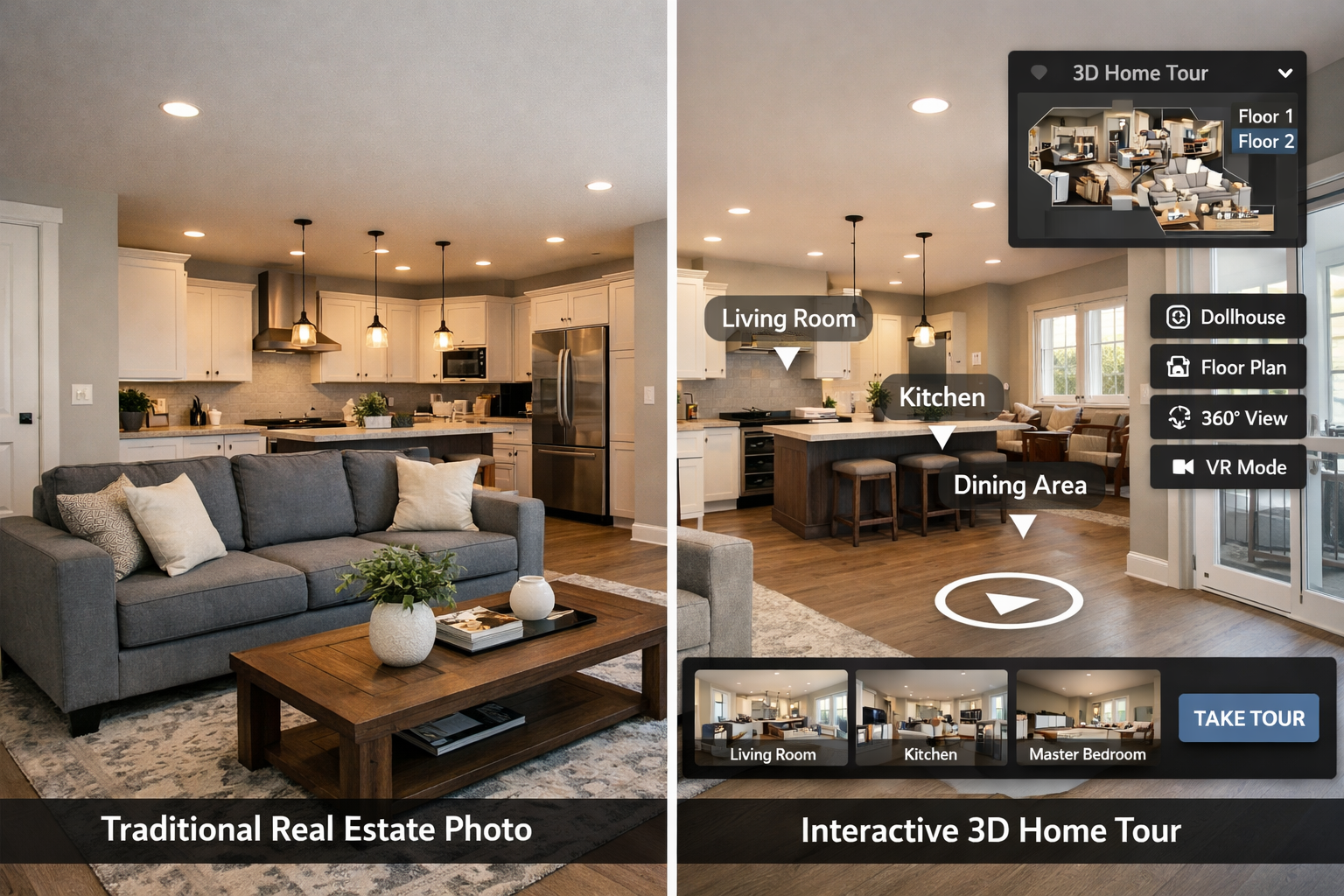
Why Visual Presentation Matters More Than Ever in Real Estate
When buyers browse listings online, decisions happen fast. A property either grabs attention or gets skipped. That is why understanding 3d tour vs photos is critical in today’s real estate market.
Traditional photos have long been the standard. But now, tools like 3d real estate tours and virtual 3d home tours are changing how buyers experience properties.
Instead of just viewing images, buyers can explore a virtual tour of property from anywhere, gaining a deeper understanding of space and layout.
So which is better?
The truth is both play important roles. Knowing how to use each effectively can dramatically improve your listing performance.
In this guide, you will learn:
- The key differences between 3D tours and photos
- When each works best
- How they influence buyer behavior
What Sets 3D Tours Apart From Traditional Photos
Traditional photos capture still images of a home, highlighting features like design, finishes, and lighting.
In contrast, 3d virtual tours for real estate create an immersive experience where buyers can move through the property.
Key differences include:
- Photos show selected angles, while interactive real estate walkthroughs show the full space
- Photos are static, while tours are interactive
- Photos highlight details, while tours reveal layout and flow
- Photos are quick to view, while tours increase engagement time
Using professional services like Brooke Haven Media ensures both formats are optimized for maximum impact.
Step-by-Step Comparison of 3D Tours vs Traditional Photos
Step 1: Visual Experience and Engagement
Photos are great for quick browsing. They provide a fast overview and help attract initial clicks.
However, real estate 3d walkthrough experiences offer:
- Full control for the viewer
- Immersive exploration
- Longer engagement times
Buyers often spend more time interacting with virtual 360 tours real estate listings than static images.
Step 2: Understanding Property Layout
One limitation of photos is the lack of spatial context.
With photos:
- It is harder to understand how rooms connect
- Spaces can appear misleading in size
With virtual home tours:
- Buyers can move between rooms
- Layout becomes clear and intuitive
This makes 3d virtual tours for real estate especially valuable for unique or complex properties.
Step 3: Buyer Confidence and Decision-Making
Photos can leave buyers with unanswered questions.
A virtual tour for real estate provides:
- Greater transparency
- Fewer surprises during showings
- Increased trust
When buyers feel confident, they are more likely to take action.
High-quality visuals from real estate media services can significantly improve this experience.
Step 4: Convenience and Accessibility
Photos are easy to scroll through and accessible on any device.
However, real estate vr tour experiences offer:
- Remote viewing from anywhere
- The ability to revisit properties anytime
- A more detailed exploration process
This is especially useful for out-of-state buyers or busy professionals.
Step 5: Impact on Listing Performance
When comparing 3d tour vs photos, both contribute to performance in different ways.
Photos:
- Drive initial clicks
- Provide quick visual summaries
3D tours:
- Increase time on listing
- Attract more serious buyers
- Improve lead quality
Combining both creates a complete marketing strategy.
You can learn more about how tours enhance listings through this virtual tours real estate guide.
Real-World Use Cases of 3D Tours and Photos
Standard Listings
Most homes use professional photos as the foundation for visibility and accessibility.
Luxury or High-End Properties
High-value homes benefit from 3d real estate tours that showcase layout, scale, and premium features.
Remote Buyers
Buyers relocating from other areas rely heavily on virtual home tours to evaluate properties before visiting.
These examples show how both formats serve different but complementary roles.
Best Practices for Using 3D Tours and Photos Together
To maximize results when comparing 3d tour vs photos, follow these best practices:
- Use photos to capture attention quickly
- Add virtual 3d home tours for deeper engagement
- Invest in professional-quality visuals
- Highlight key features strategically
- Work with experienced providers
If you want expert guidance, you can always contact a real estate media specialist.
Final Thoughts on 3D Tours vs Traditional Photos
When evaluating 3d tour vs photos, it is clear that both are essential.
Photos help attract buyers, while 3D tours provide the immersive experience needed to convert interest into action.
The best strategy is not choosing one over the other. It is using both together to create a complete and compelling listing.
As the market continues to evolve, listings that combine strong visuals with interactive experiences will have a clear advantage.
Frequently Asked Questions About 3D Tours vs Photos
What is the difference between 3D tours and photos?
3D tours allow interactive exploration of a property, while photos are static images highlighting specific features.
Are 3D tours better than photos?
They offer more engagement and spatial understanding, but photos are still essential for first impressions.
Do 3D tours help sell homes faster?
They can increase engagement and attract more qualified buyers, which may lead to faster sales.
Should I use both 3D tours and photos?
Yes. Combining both provides the best results by attracting and engaging buyers.
Are 3D tours worth the investment?
For many listings, especially in competitive markets, they provide strong returns by improving visibility and buyer interest.